News & guides · Guides
Five dispatch checks that prevent bad days
Most dispatch mistakes aren’t dramatic — an expired medical, a missed 100-hour, a squawk nobody verified. Here’s what to check every time, and why.
Most dispatch mistakes aren’t dramatic. Nobody sets out to fly an airplane past its 100-hour or send a student solo on an old endorsement. It happens because the information lives in three places and the person at the desk is busy.
Here are five checks worth doing on every flight — whether a person does them or software does.
1. The pilot’s medical
Under 14 CFR 61.23, most pilots need a current medical certificate (or to meet BasicMed) to act as pilot in command. The tricky part is that a certificate’s duration depends on its class, the pilot’s age and the privileges being used. Keep the class and the date on file, and check it at dispatch — not once a year.
2. Flight review
A flight review within the preceding 24 calendar months is required to act as PIC (61.56). Renters drift past this quietly. A check at dispatch catches it before the flight, not after.
3. The student’s solo endorsement
A student pilot needs a solo endorsement from an authorized instructor within the preceding 90 days (61.87(n)). Ninety days goes fast in a busy training schedule.
4. Inspections
An annual within the preceding 12 calendar months (91.409(a)), and a 100-hour inspection for aircraft used for flight instruction for hire (91.409(b)). Add your own: ELT, pitot-static and transponder checks, oil changes. Track them by date and by tach, and let an overdue item stop the flight.
5. Open squawks
A squawk that grounds the airplane has to stop dispatch — every time. Just as important is the workflow: who reported it, who verified it, and whether it was deferred properly.
How FlightDesk does it
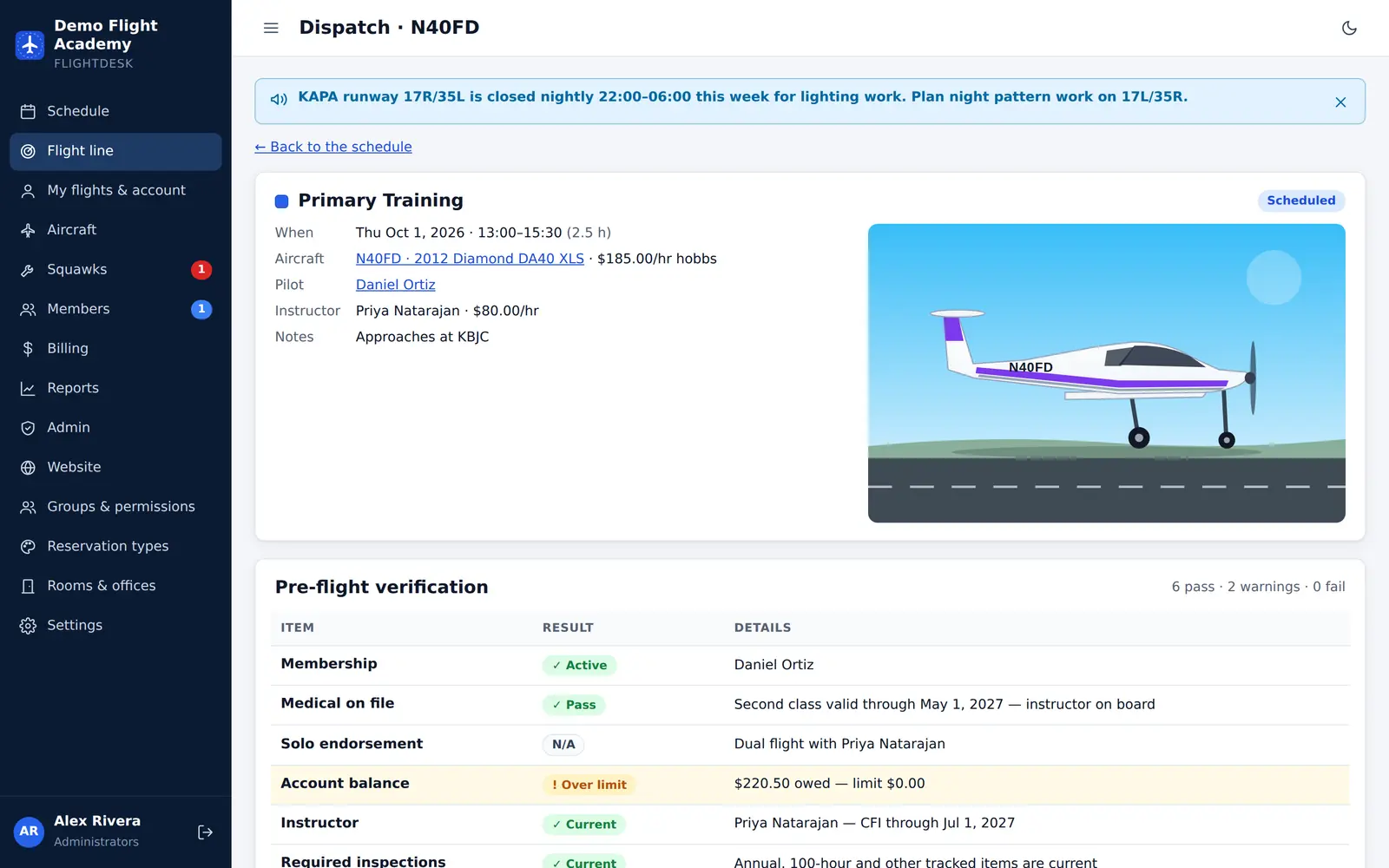
FlightDesk runs these checks — plus checkouts, renter insurance, account balance, instructor currency and aircraft availability — on every dispatch, and shows pass, warn or fail for each. You decide which ones block a flight. Airworthiness problems always do.
This article is general information, not legal advice. Always check the current regulations and your own operating rules.